I recently came across an online project, that will “ estimate and visualize sentiment for short, incomplete text snippet”. Tweet Sentiment Visualization presents a visualization of basic emotional properties in a text. Focusing on Twitter, you simply add in a keyword and a detailed visual analysis is created, using Russell Model of Emotional Effect 1.
Voyant Tools
Voyant is scholarly project focused on interpreting of texts and design of tools in the humanities. You too can use Voyant to analyze your own texts, to write essays with embedded hermeneutical panels generated by Voyant, and you can adapt the code to create your own versions of tool. (Voyant-Tools)
Crowdsourcing
Crowdsourcing, a modern business term coined in 2006, is defined by Merriam-Webster as the process of obtaining needed services, ideas, or content by soliciting contributions from a large group of people, and especially from an online community, rather than from traditional employees or suppliers (Wikipedia) Continue Reading
Gif-ification
It is hard to be on social media at the moment without coming across GIFs. But what is a GIF, how has it come to be a widely used format for amateur and professional alike? A GIF is a form of computer image that moves as an animation, because it consists of frames, like a movie with no sound.
“If everything is a network, nothing is a network”
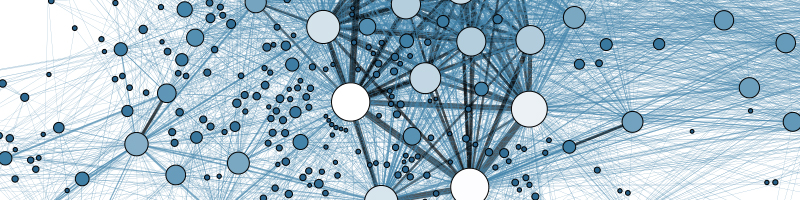
I was researching open source and advocacy when I came across an interesting blog post about networks on the Visualising Information for Advocacy website. Written by Mushon Zer-Aviv, just a few weeks ago, it is a discussion exploring our concept of networks, and how the current trends in the visualisation of networks are missing important factors, such as flow, narrative and directionality.
Video Essay
The second part of the Editing Skills module (read about part 1 here)
MADC Visual Essay from stitchlily on Vimeo.
In my video essay, I am exploring my role as I unconsciously edit in my arts practice, and edit my community practise. I am very interested in the process, the difference between arts practice, and other work. The experience of editing a Wikipedia page, has made me not just appreciate but be excited by the concept of open participatory projects.
Editing Wikipedia
For the Postgraduate Editing Skills Module, we were asked to edit a Wikipedia Page, write a critical review of the editing experience, acknowledging the theories and methods of digital scholarly editing and post it to a class blog Edit4Credit
I chose to edit the Wikipedia Page ‘Irish Lace’, to look at a few key areas the page was missing: mainly sources, citations and more in-depth history. There was only one paragraph on the origins of Lace in Ireland, and it was inaccurate. I added in 2 paragraphs on the origins of lace, with citations, sources and internal links.
PechaKucha
Comhrá
Comhrá, is the Irish word for conversation. I was trying to think up of a category name that I could file blog posts that include any thoughts or opinion pieces I write, but I couldn’t think of a suitable English word.
I am learning Gaeilge at the moment, and trying to use it everyday, in order to lose the eagla (fear) of speaking bad Irish, whilst living in a Gaeltacht area (Irish-speaking area). I like this term, comhrá. So I’ve decided to file any posts which contain discussions, research, thoughts, conversations with myself, or others, under the category Comhrá
PechaKucha
For one of my modules, Conceptual Introduction to Digital Arts and Humanities, my Christmas assignment consists of a presentation using either the PechaKucha or Ignite format. Fast and fun presentation formats, apparently. I decided to go with PechaKucha because it began in Tokyo, and I am very influenced by all things Japanese. ( ペチャクチャ, means chit-chat).