:::: MENU ::::
Browsing posts in: Events

Digitally Remapping Ireland’s Ordnance Survey Heritage

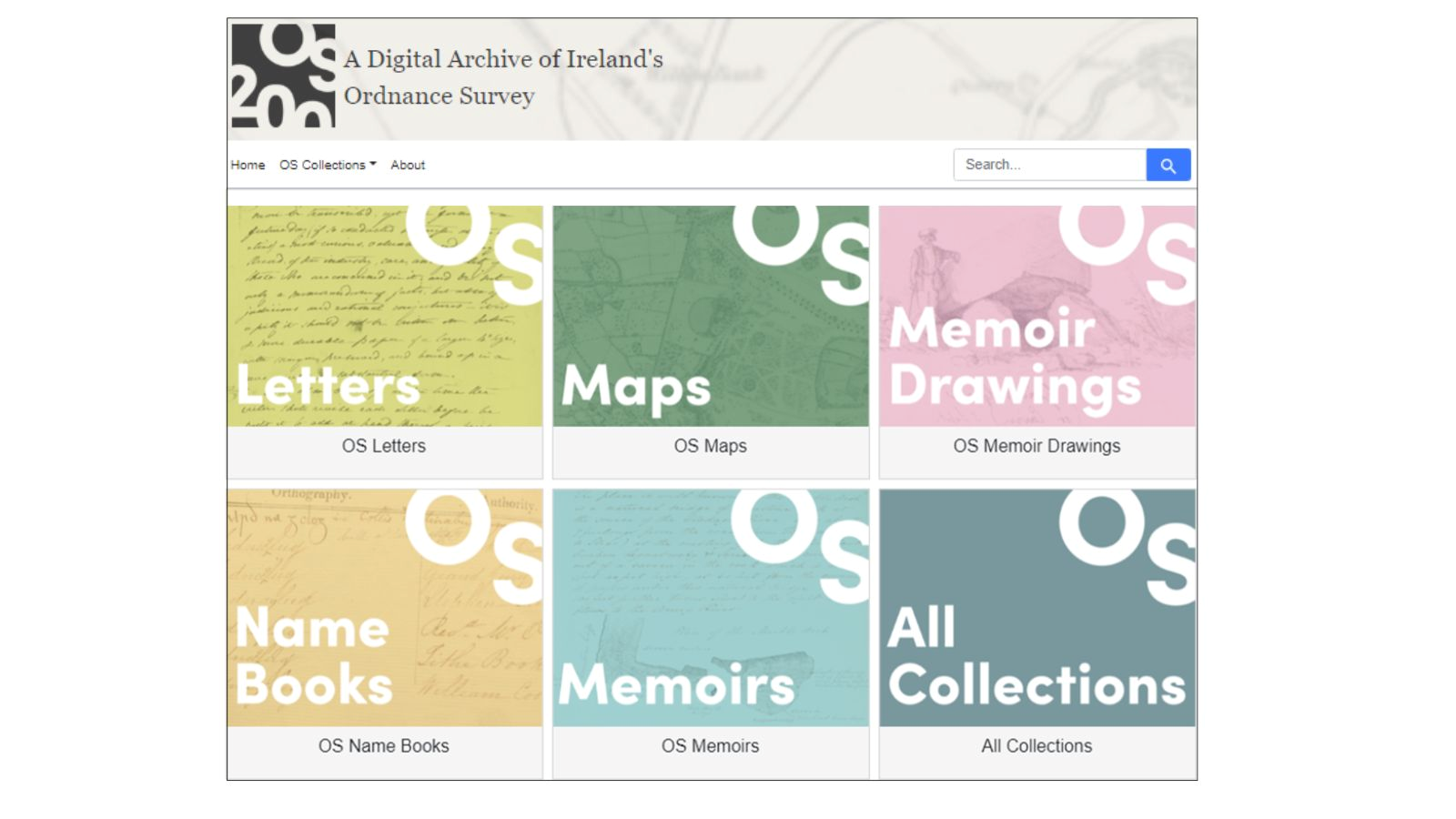
screenshot of the Digital Archive of Irelands Ordnance Survey, with bozes saying letters, maos, memoir drawings, name books, memoirs, all collections

Nineteenth-century Ireland was the first country to be entirely and systematically mapped at a scale of six-inches-to-one-mile. The British military-led Ordinance Survey team traveled across pre-famine Ireland gathering a range of information, including geographical, archaeological and toponymical information including local customs, antiquities, and place names.

“These records capture the pre-famine landscape of localities across the island as they were in the 1820s and 1830s, including farming practices, language, folklore, trades, and religion, as well as details of the lives and activities of those employed by the OS in Ireland. 

The cultural complexities of the OS in Ireland are recorded in a variety of source materials, not just maps. In various archives, museums and repositories across Ireland and Great Britain lie correspondence, statistical accounts, drawings and sketches, and comprehensive placenames, providing a pre-famine record of Ireland and its population. 1.”

The OS200 project is led jointly by Dr Catherine Porter at the University of Limerick (UL) and Professor Keith Lilley at Queen’s University Belfast (QUB), bringing together a cross-disciplinary team of geographers, historians, archivists, linguists, archaeologists, computer scientists, and digital specialists; their varied interests and specialisms helping inform the creation of a project database and online resource. 

OS200 is a multi-project that aims to gather historic Ordnance Survey (OS) maps and texts, currently held in disparate archives, to form a single freely accessible online resource for academic and public use. 2

But why are these historic maps relevant? During the mapping of Ireland, the surveyors gathered a significant volume of other materials including letters, notebooks, memoir drawings, and place name books. The gathering of these resources in one single digital repository is opening up new thoughts and ideas of what the mapping process meant to Ireland at the time, its landscape and its society. Different iterations of this state ordnance survey can reveal a lot, not just from what is there, but what is not there.
Continue Reading


European Public Domain Day 2026

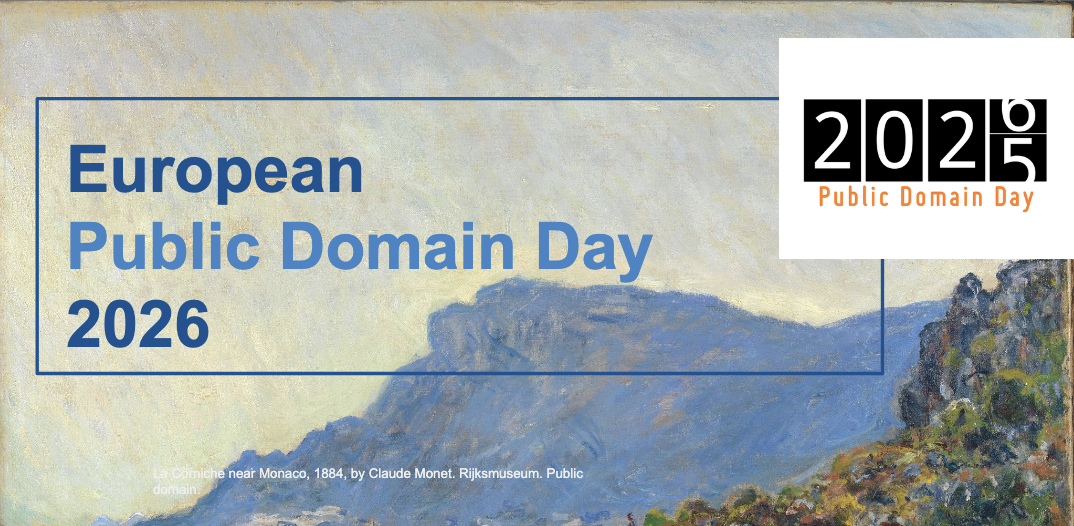
graphic containing text saying European Public Domain Day 2026, over a painting by Claude Monet.

European Public Domain Day is an annual event that celebrates the Public Domain. A number of European institutions and organisations come together to highlight the public domain, celebrating new works being released, but also discussing different types of legal, technical, financial, and institutional barriers that prevent public access, even after copyright protection ends.

In 2026, this celebration took place online and in-person on the 15th of January in Brussels, in the Royal Library of Belgium (KBR), with numerous partners, local and international. I was one of 3 people sponsored to attend, and it was such a privilege to get off the island and join mainland Europeans, on this jam-packed insightful day listening to discussions on all the things I love: heritage, community, open source and open access. 

Continue Reading


Create, Connect, Share!

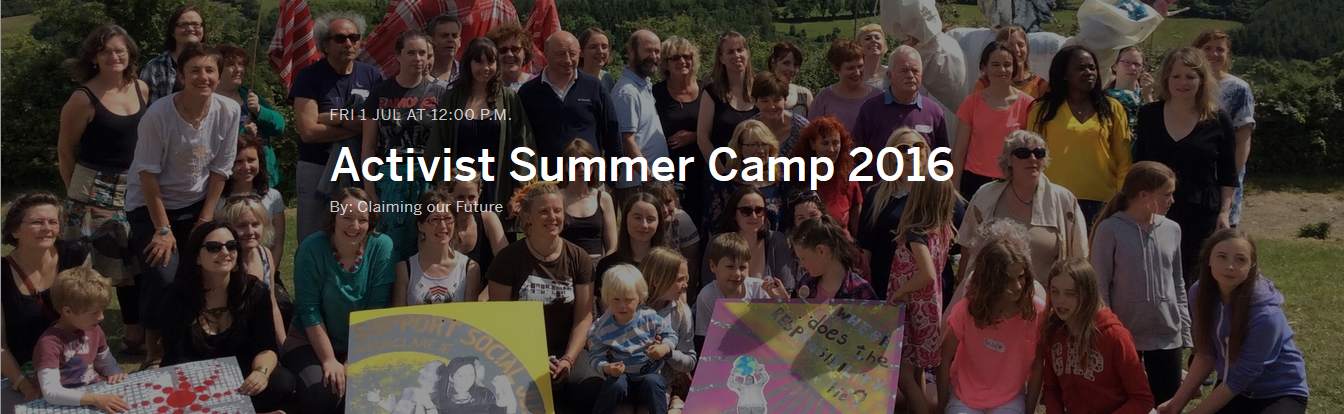
image taken at Activism Camp 2015

I’m currently preparing for my workshop at Activism Camp next week, 1/2nd July, in Knockree Youth Hostel, Enniskerry, County Wicklow.

Run by Claiming our Future, it is an excellent opportunity to meet with like-minded individuals, network, and get a crash course in creative action for social change.

I will be giving a workshop on mindmapping a social media strategy, focusing on a ‘less is more’ approach. Through research on your community, and by creating a strategy, you can spend less time on ‘pushing’ your campaign and more time ‘pulling’, creating good content.

Continue Reading


Digitalis 2.0

gif saying digitalis 2.0

Digitalis 2.0 is a 2 day conference taking place on Thursday and Friday, April 7-8, 2016. Myself, along with other MA Digital Cultures, MA Digital Humanities and PHD students, will be presenting series of talks on our interests and research. It takes place at the Active Learning Space, Food and Technology Building, UCC from 10am-3pm.

As part of course, we get to stage this 2 day conference. It is a great experience to organise the conference, build on your strengths, depending on what role you play in the organization, and most of all to get to spend 2 ys with your fellow students, hearing all about their interests.

Continue Reading


css.php